Latest News
On 18th June 2021 a raft to detect if mink are living around Radwell lake was launched onto the water.
RevIvel members have been trained by Herts and Middlesex Wildlife Trust in how to monitor for the presence of water voles; sedges nibbled at a 45 degree angle, evidence of feeding stations and “tic tac”-shaped droppings are the “give-away” signs. It is inconclusive whether water voles are present in the upper Ivel. However in order to give them a chance, we must first ensure there are no mink in the area
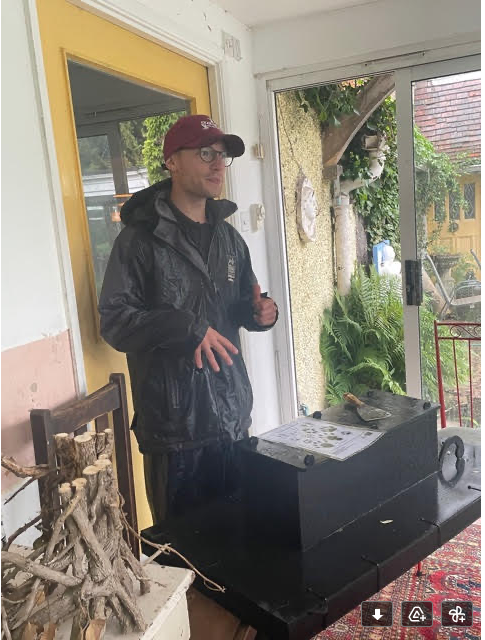
The raft was kindly donated by Hertfordshire and Middlesex Wildlife Trust and Josh Kalms kindly spent some time ensuring it was in the right place.
The raft encourages mink to leave evidence of their presence in the form of footprints. The raft uses a standardised mixture of clay and sand to record the tracks over a period of 1-2 weeks.
American mink – escapees or released by animal rights activists – have caused a complete population crash in water vole numbers. The snout of an American mink is just big enough to fit down a water vole burrow and they have been almost wiped out by this voracious predator. Therefore a mink monitoring raft has been tethered in The Mill Pond which is checked regularly by RevIvel volunteers. Mink are curious creatures and would investigate the raft, leaving distinct footprints in the clay. So far, no evidence has been found.
Water voles are a keystone species – i.e. a species which has a disproportionately large effect in its natural environment relative to its abundance. Additionally, a charismatic and intrinsic part of our childhoods (think Ratty in Wind in the Willows). Therefore RevIvel is keen to help this characterful animal re-establish itself along the banks of the upper Ivel.
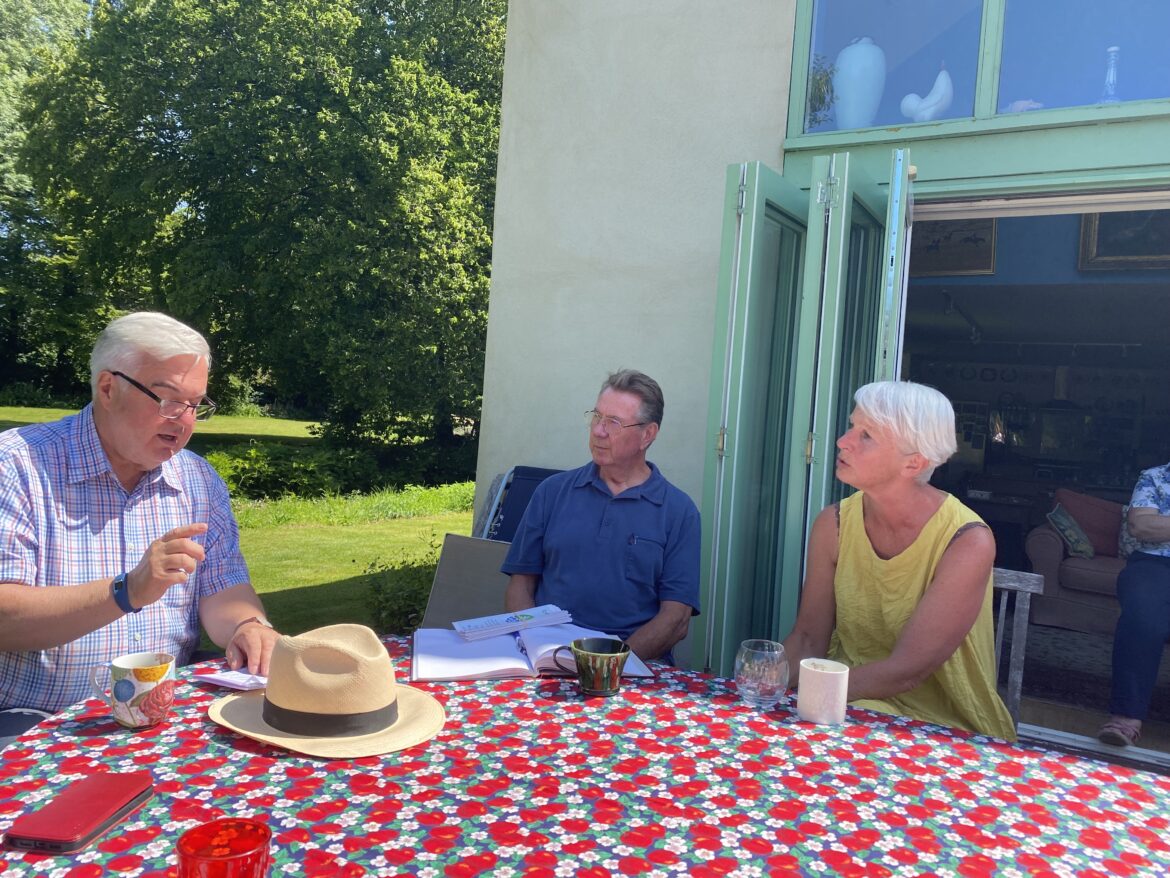
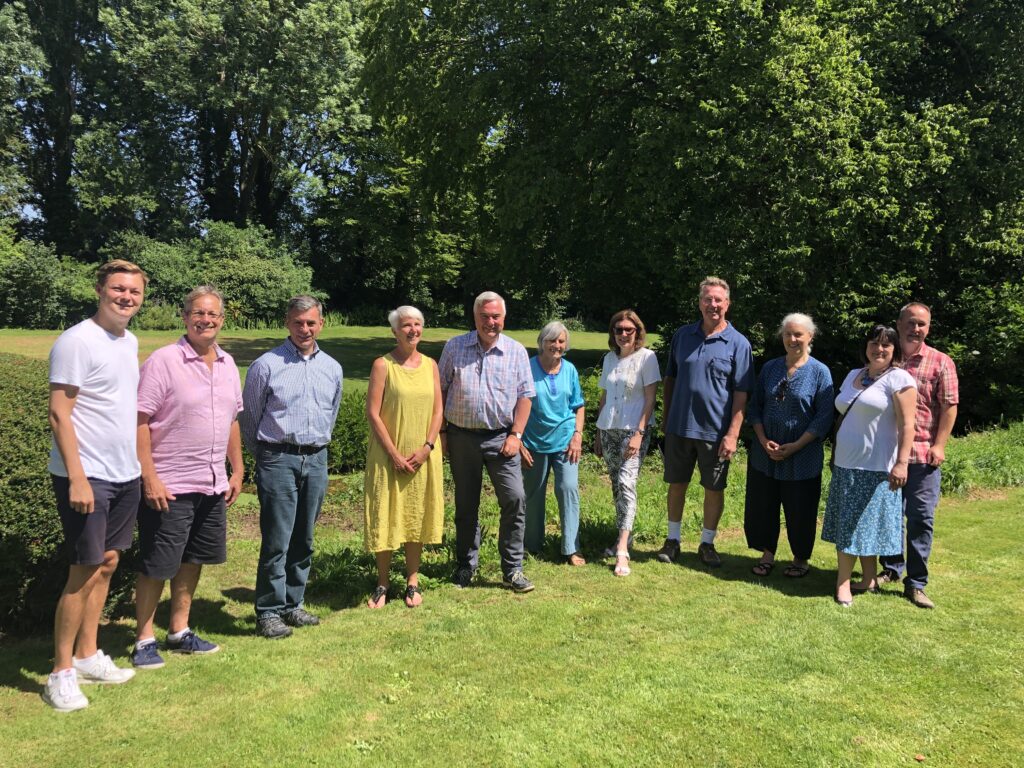
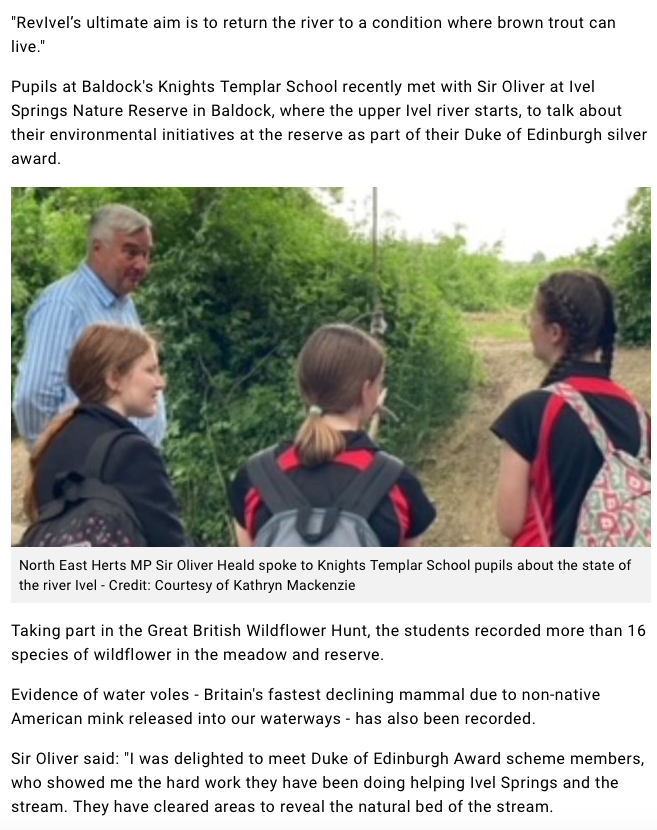
Sir Oliver Heald met with local pupils, who have been undertaking conservation projects as part of their Duke of Edinburgh volunteering, to hear what they have learnt and see what they have been doing in the Ivel Springs Nature Reserve. Sir Oliver and the pupils enjoyed chatting about “all things chalk stream”.
This is an article taken from the local newspaper.
A large sewage pollution of the Ivel Springs occurred at the Ivel Springs nature reserve on 27th April 2021 when a pipe transferring sewage from Baldock to Letchworth treatment works burst. A large volume of raw sewage flowed down local roads and entered ditches before eventually disappearing into the ground just above the source of the River Ivel. It is only by good fortune that the river was not directly polluted.
Members of RevIvel reported this issue to both the Environment Agency and Anglian Water. The sewage discharge lasted for over 12 hours with large volumes being discharged to ground where it has polluted groundwater. Anglian Water eventually attended and managed to reduce the discharge by tankering sewage away before mending the pipe, but the situation was made worse by their sluggish initial response.
The Environment Agency subsequently classed this as a category 2 groundwater incident (the second most serious category) but very little effort initially went in to assessing where the untreated sewage went and what its likely impacts were. Only after pressure from RevIvel was any groundwater sampling done and the results of this have yet to pick up contamination. This incident still has the capacity to pollute the River Ivel or the springs that feed it so if you ever suspect pollution is occurring please do not hesitate to report it to the Environment Agency via their hotline number 0800 807060.
Water Vole Training at Tewinbury with Josh Kalms from Herts and Middlesex Wildlife Trust
April 20th 2021
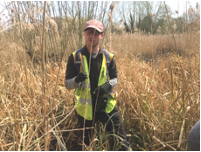
Revivel members that attended the training were Ian and Beth Hall, Kathryn Mackenzie, Craig Johnson and Catherine Wilmers
We met up at 1.0pm at the car park and Josh took our names etc. He recommended having a stick and hat for climbing through the undergrowth and parting the reeds. He took us into the reserve.
Josh explained about voles in Hertfordshire and that mink have taken over many of the vole burrows as they can squeeze into them. So there are not many places where they live. He explained about mink rafts, how they work and catch mink and that HMWT have a number so RevIvel could have a couple to spread around. Once a mink is detected by its tracks on sand or clay on the raft, a trap can be set. The mink is often caught soon after. He also said that voles are like Mars bars for barn owls, foxes and other predators!
Then he explained to us the difference between a rat and a vole. A rat is a bit bigger and has its toes pointing in the same direction compared to a vole which has its side toes splayed out. The water vole has ears half hidden by its fur and a rounded front of face; the rat has a pointed face and more prominent pinkish ears. The rat has a long tail without hairs, the vole tail is about 2/3 thirds its body length. Rat droppings are larger and usually pointed at one end.
Water voles typically eat reeds and sedge, cut at an angle (about 45 degrees) with their teeth. Josh led us to a known area where there are signs of water voles and showed us the chewed vegetation ‘feeding station’ and the nearby ‘latrine’ with poo a bit like ‘tictacs’ but bigger, 12 mm long by 4-5 mm wide. Sometimes the vole will trample on the droppings and spread them out to mark its territory. Bank vole droppings are much smaller.
Vole populations can grow fast in a year as one female can produce many offspring. They need a lot of vegetation for cover and a supply of water, still or slow moving.
Josh said he would be delighted to come to Ivel Springs in Baldock and Radwell and help us survey to see if we have water voles.
GRIFF RHYS JONES: I thought we were the hip, aware, green generation… so why are we killing our rivers?
MAIL ONLINE – 16 August 2020
Salmon have gone. Eels have gone. Fish are expiring. Rivers have dried up. The weeds are rotting. The water is dying. We have a growing emergency. Little Welsh rivers such as the Llynfi have recently choked with dead fish. Singer-turned-campaigner Feargal Sharkey is pleading with us to pay attention to the chalk streams.
Our rivers are in trouble and this distresses me. I love all our waterways. I have fallen in most of them.
I have paddled up to Runcorn. I have surfed the Severn Bore. I have punted the Great Ouse. I have kayaked the Wye. I have upset a coracle in Welsh rapids, abseiled through waterfalls in Scotland and swum in the Waveney. I remember the eerie feeling of the reeds brushing against my thighs and the sweet taste of fresh water in my mouth.
I even went ‘lave fishing’ with one the very few remaining operators in the Severn. That’s catching the fish with nothing but a net in the shallows. Not easy. But even then, 15 years ago, I was ashamed to discover that the highest recorded catch of salmon on that river had been as recently as the 1970s and the number had then sunk, during my own lifetime, to become a crisis. This year the few remaining lave fishermen who catch no more than six in a year have been ordered to stop to preserve stocks.
I also went out with our last remaining professional eel-catcher. His trade had died, in the very place where they named a cathedral after the huge number that used to be caught there, Ely.
Salmon have gone. Eels have gone. Fish are expiring. Rivers have dried up. The weeds are rotting. The water is dying. We have a growing emergency. Little Welsh rivers such as the Llynfi have recently choked with dead fish. Singer-turned-campaigner Feargal Sharkey is pleading with us to pay attention to the chalk streams.
What is going on? I thought we were a good, aware, hip, green generation. Yet things are getting worse and worse, while the water companies trumpet that we have never had it so good.
The Comet – 13 August 2020
A community group desperately trying to save the river Ivel – home to a huge variety of rare and vulnerable wildlife – “from being lost forever” is urging people to join the fight.
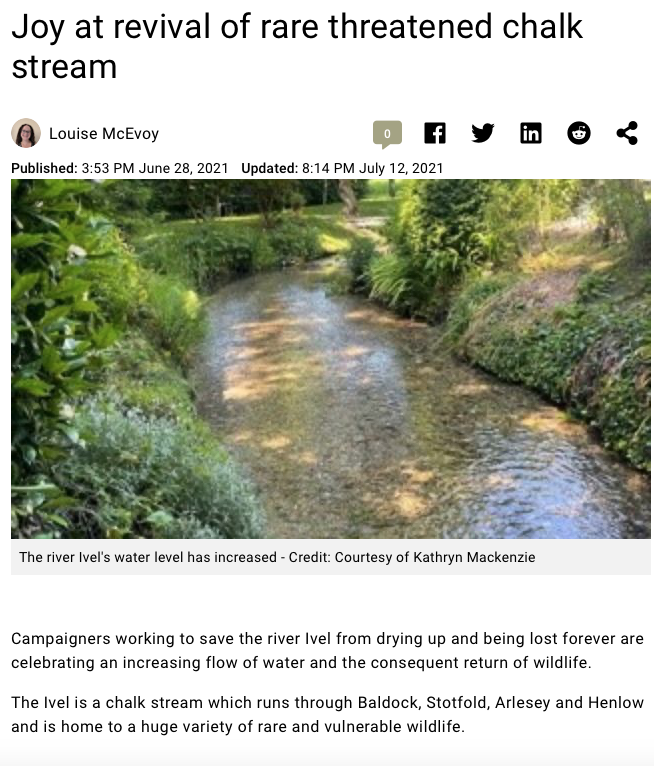
The Ivel is a chalk stream which runs through Baldock, Stotfold, Arlesey and Henlow. There are fewer than 200 chalk streams in the world, with about 10 per cent found in Hertfordshire, and species like water vole, wild brown trout and mayflies depend solely on these chalk streams to survive in the county.
The RevIvel Association was formed in 2019 to challenge Affinity Water’s over abstraction from the river to supply homes and businesses.
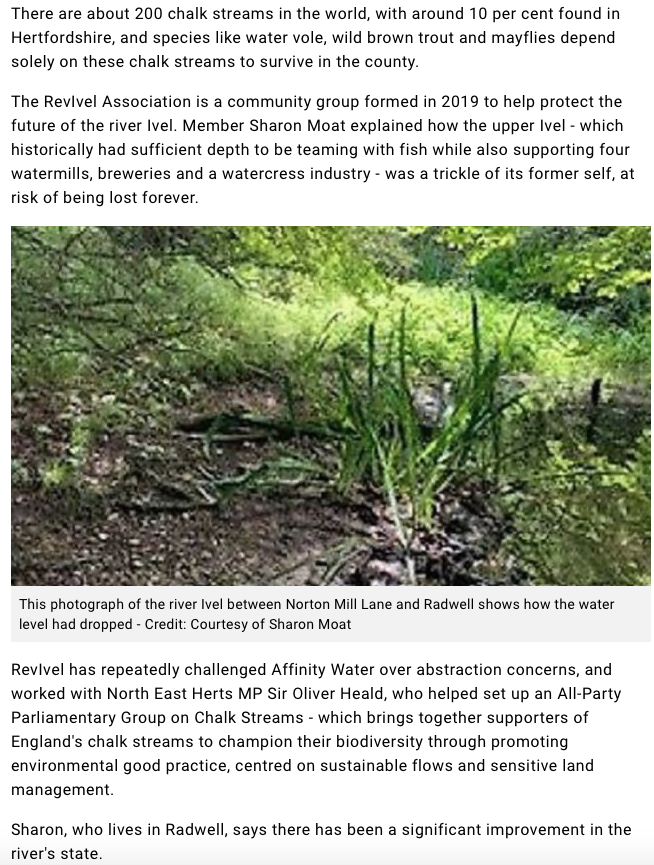
Member Sharon Moat, who lives in Radwell, said: “The upper Ivel is perennial and would not naturally become dry. It used to have sufficient depth and flow all year round to be teeming with fish while also supporting four water mills, umpteen breweries and a watercress industry.
“The river is a mere trickle of its former self, at risk of being lost forever. Many in lockdown enjoyed walks along the riverbanks watching the butterflies and bees. Please help protect what remains.”
As part of action to restore, improve and protect the river Ivel, Sharon said Sir Oliver Heald, MP for North East Herts, is calling for an All Party Parliamentary Group for chalk streams, and Anthony Browne, MP for South Cambridgeshire, is calling for a DEFRA chalk stream taskforce.
RevIvel has also been instrumental in establishing the Chalk Aquifer Alliance – an umbrella organisation uniting independent chalk stream groups lobbying for the protection of these environments.
Sharon is urging more people to join RevIvel. She said: “The river Ivel is rare and important. Please don’t let it be lost on our watch.”
A spokesman for Affinity Water said: “We understand the concerns of residents regarding low flows along their local river and we are committed to improving globally rare chalk streams, such as the river Ivel.
“We do not take water directly from the river, but from deep underground in the chalk aquifer.
“Climate change, historical river alterations, natural seasonal flows, dry weather and the demand for water all play their part in the condition of chalk streams.
“We are working hard to adapt to the challenges that climate change is bringing to our local environments, whilst meeting increases in population and the demand for water.
“We do not take more water than is needed to supply the local area and operate within our licence conditions.
“However, we do recognise more needs to be done. We have a range of proposals we are developing and are meeting with the RevIvel group to discuss these. Amongst these proposals are actions to minimise the effect of abstractions in dry periods, restore sections of the river that have been heavily modified over time and reduce abstractions from groundwater by over 623,000 litres per day by 2025.
“Customers can play a part to help their environment too by being mindful of their water use. Simple actions such as using a watering can instead of a hosepipe, turning the tap off whilst brushing your teeth or using the dishwasher only when full can make a massive difference collectively.”
For more information, or to join RevIvel’s fight, follow the group on Twitter @IvelRev or visit revivel.org
SOURCE: https://www.thecomet.net/news/appeal-to-help-stop-over-abstraction-of-river-ivel-1-6791659
The government is looking the other way while Britain’s rivers die before our eyes
George Monbiot, The Guardian – 12 August 2020
You can judge the state of a nation by the state of its rivers. Pollution is the physical expression of corruption. So what should we conclude about a country whose rivers are systematically exploited, dumped on and bled dry?
I’m writing from the Welsh borders, where I’m supposed to be on holiday. It’s among the most beautiful regions of Britain, but the rivers here are dying before my eyes. When I last saw it, four years ago, the Monnow, a lovely tributary of the River Wye, had a mostly clean, stony bed. Now the bottom is smothered in slime and filamentous algae. In the back eddies, the rotting weed floats to the surface, carrying the stench of cow slurry…………
The Comet – 7 December 2019
A water company will be held to account over “the perilous state of a rare and ecologically-important chalk stream”.
Action group RevIvel Association – set up to address what members believe is an environmental emergency caused by over abstraction from the River Ivel by Affinity Water – now has the support of North Hertfordshire District Council in its endeavours to protect the river.
The Ivel flows through Baldock, Stotfold, Arlesey and Henlow, but the RevIvel Association says current water levels are catastrophic and it aims to ensure Affinity Water sufficiently invests in developing a range of water sources, or significantly reduces water wastage.
The council has now backed a motion by Councillor Tom Tyson to help protect the river.
Cllr Tyson, who represents the Arbury ward, expressed “concern about the perilous state of the upper reaches of the river Ivel and other local chalk streams, including the rivers Purwell and Hiz and St Ippolyts Brook”.
He said: “The Ivel has been continuously dry from the Ivel Springs Local Nature Reserve to Radwell for well over a year, and there has been no flow in the upper Ivel during half the months of the previous four years.
“The Ivel is one of the rare and ecologically-important chalk streams of the Chiltern Chalk Aquifer. This is a resource we should cherish and protect. Instead, the watercourses are dry, the fish are dead and other wildlife is gone.
“The disaster of the Ivel is not an isolated instance among the chalk streams of the Chiltern Chalk Aquifer: many others are suffering dangerously low levels and environmental harm.”
The council intends to question Affinity Water over its plans for reducing abstraction rates and investing in measures to conserve and enhance the Ivel and other local chalk streams.
Assurance is also being sought from the Environment Agency that it will take action where Affinity Water allows its activities to harm the environment.
An Affinity Water spokesman said: “We are working closely with the Environment Agency, Herts County Council and stakeholders to improve the resilience of the ecosystem of the spring area. We have been assessing the conditions in Ivel Springs and from 2020 to 2025 we will be carrying out multiple actions to improve the top of the catchment. We take the preservation of the chalk streams very seriously.”
SOURCE: https://www.thecomet.net/news/over-abstraction-of-river-ivel-1-6407723